
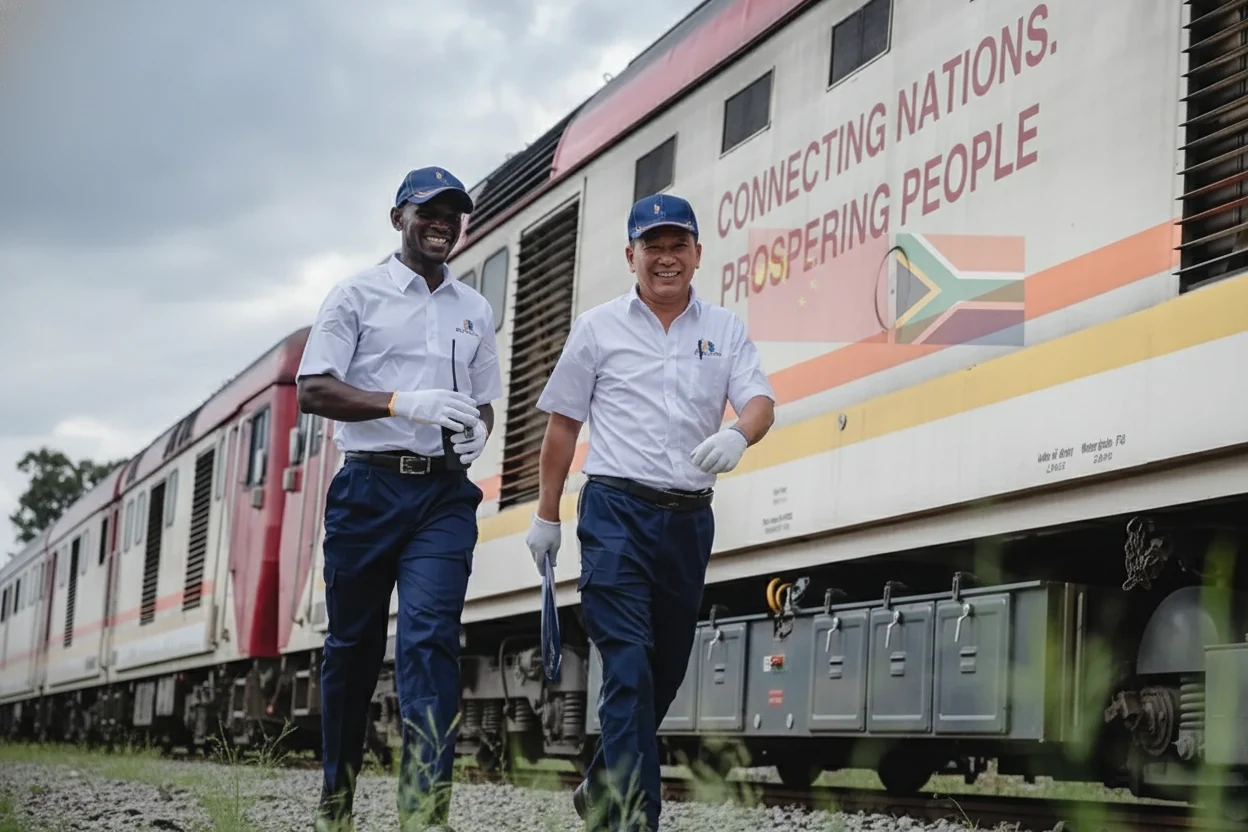
China’s Africa play is getting less theatrical and more useful. The era of headline-grabbing railways, ports and power stations is giving way to a model built around trade access, industrial links and quieter supply-chain control. For South African business owners, that is a better opportunity than it sounds at first glance, because trade integration creates room for suppliers, processors, logistics firms and niche manufacturers that were never going to land a billion-rand infrastructure contract.
The opening China is creating is practical, not glamorous. It favours businesses that can add value, meet deadlines, prove compliance and keep their paperwork clean. That is where South African entrepreneurs can win.
China is buying differently
China’s move to zero-tariff treatment for imports from 53 African countries is a signal, not a footnote. It shows a push to pull African economies closer to Chinese-linked supply chains and to treat the continent as a producer of manufactured goods, processed products and technology services, not just ore trucks and container loads of raw commodities.
For South African exporters, the obvious mistake is to keep thinking in raw material terms. The better move is to look at processed fruit, bottled drinks, canned foods, wine, specialty agricultural products, refined mineral inputs, automotive parts and other manufactured goods that already have some local value added. China is not short of volume. It is short of dependable, differentiated supply.
That is good news for businesses that can prove consistency. A small processor in Limpopo selling packaged fruit products, or a component maker in Gauteng supplying parts to a larger exporter, is closer to this shift than a miner shipping unfinished ore.
Follow the smaller projects
The old China-Africa story was built on large projects that made for good press and ugly debt debates. The next phase is more commercial and less dramatic. Industrial parks, logistics hubs, agricultural modernisation and clean-energy ventures are taking more of the attention because they are easier to finance and easier to tie to real economic activity.
For South African firms, that matters because smaller projects are easier to enter. You do not need to be the anchor investor. You need to be the supplier, transport partner, maintenance contractor, customs broker, packaging business or local compliance support behind the larger operation.
If you are trying to find your place, start with the Department of Trade, Industry and Competition, trade notices from the Forum on China-Africa Cooperation, and investment agencies such as TIKZN or GGDA. Then track where Chinese firms are setting up manufacturing or logistics activity. The African Mining Indaba and Africa Energy Week are not just conferences for executives in expensive shoes. They are where supply contracts, procurement leads and partnership openings surface.
Green minerals are where the pressure is building
Africa’s cobalt, lithium and copper reserves are now central to the green-energy race, and China knows it. Chinese manufacturers already dominate much of the clean-energy supply chain, so the next logical move is to secure stable access to the minerals that feed batteries, electric vehicles and renewable technologies.
South African entrepreneurs should not think only about mines. Think processing, transport, storage, testing, parts supply, equipment servicing and compliance support. If a Chinese-backed project in Zambia, Namibia or the Democratic Republic of Congo needs packaging, freight management, maintenance services or specialised components, a South African business can often be involved without owning the mine or the plant.
The sharper play is beneficiation. Platinum group metals, chrome, manganese and other mineral inputs have more value once they are processed. Businesses that can move one step up the chain are better placed than those waiting to be paid by the tonne.
Digital trade is becoming part of the deal
China is also expanding its influence through telecommunications networks, digital infrastructure and e-commerce platforms across Africa. That brings a different kind of opening for South African firms, especially those in software, digital services, online retail, logistics and training.
A tech business does not need to build a telecom tower to benefit. It can build on top of one. That means services that work with Huawei or ZTE infrastructure, apps tailored to African users, cross-border e-commerce support, cybersecurity services, AI training, data analytics or payment integration with systems such as WeChat Pay and Alipay where the market allows it.
The real opportunity is in local adaptation. Chinese platforms and infrastructure are useful only when someone makes them workable in South African conditions, with the right language, customer support, tax treatment and delivery structure.
The paperwork decides the deal
This is where many small businesses lose before they start. A Chinese buyer or partner is not a shortcut around South African rules. If anything, cross-border trade makes compliance more important.
Before you sign anything, get the contract right. Spell out governing law, payment terms, delivery timelines, quality standards and dispute resolution. Keep the language clear. If the deal is serious, have the documentation reviewed properly. Do not rely on vague promises or handshake confidence.
Your business also needs to be in order with CIPC, SARS and, where relevant, SARB exchange control rules. Make sure your tax pin is active, your VAT position is correct, and your import or export documents line up with what the bank, customs and the counterparty expect. If you are handling customer data, POPIA applies. If you are licensing IP, register and protect it before it walks out the door in a PowerPoint deck.
The businesses most likely to profit
South African firms best placed to benefit from this shift are the ones already halfway there. Agro-processors. Automotive component suppliers. Mineral beneficiation companies. Renewable energy manufacturers. Digital service providers. Logistics and warehousing firms. Packaging businesses. Compliance and trade support firms.
The pattern is simple. China is moving from building things for Africa to building with Africa. South African entrepreneurs who can package a product, document a process and deliver consistently have a real shot at being part of that shift.