Clanwilliam does not look like the sort of place that should be pulling export numbers in the hundreds of millions. It is a small town with a modest local income base, yet it sits at the centre of an industry that ships Rooibos to more than 60 countries and brings in over R900 million a year. The gap between the town’s size and the business’s scale tells the whole story.
The lesson for local business owners is blunt. Size is not the advantage. Control of a scarce product, a protected name, and a clean supply chain is. Clanwilliam built an export engine by doing the unglamorous work properly, then defending the right to sell what it makes.
Why Clanwilliam owns Rooibos
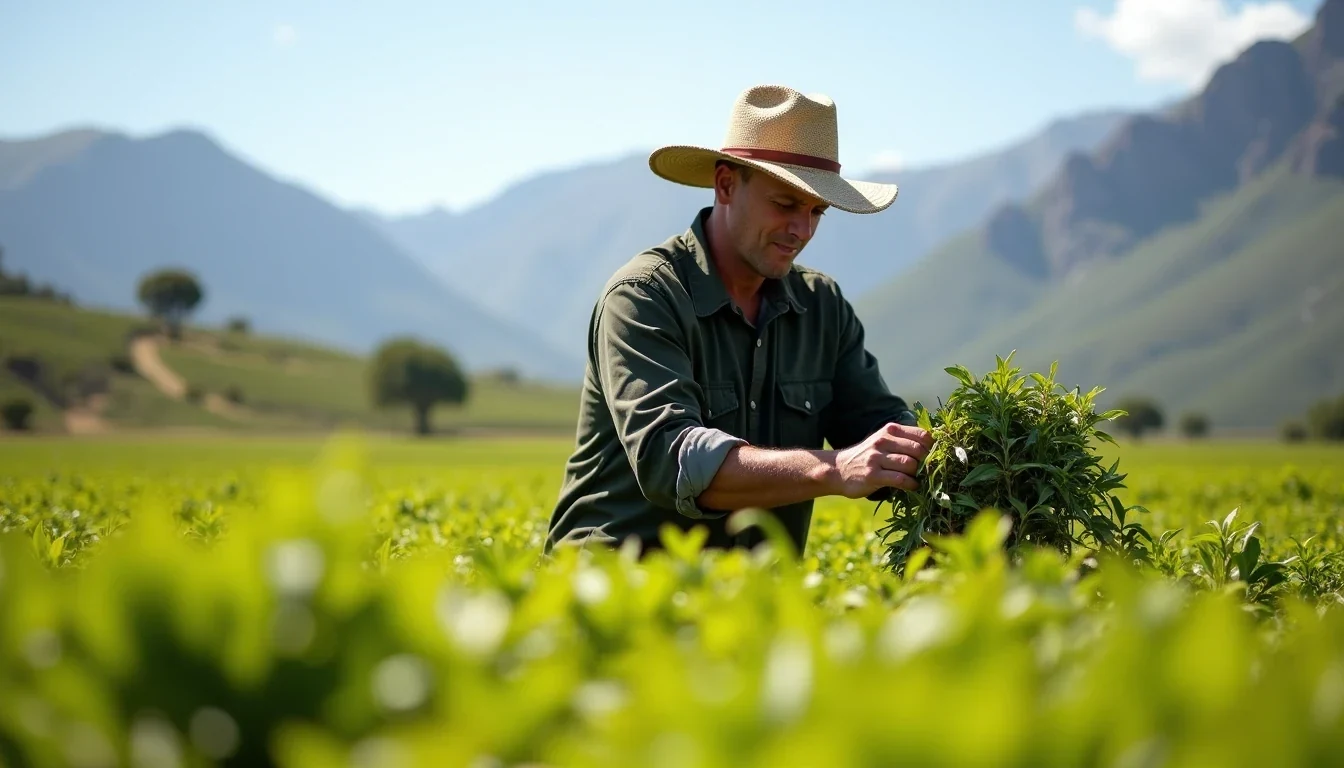
Rooibos is not a crop that can be planted anywhere and forced to behave. It grows naturally in a narrow stretch of the Western Cape, especially around the Cederberg. The plant depends on acidic, sandy soils, dry summers, wet winters, and a climate that suits its growth cycle. This rare combination makes the region itself part of the product.
The crop also has a history. San and Khoi communities used Rooibos long before it became a commercial item. Later, in the 1930s, Dr P. Le Fras Nortier helped move Rooibos from wild harvesting into systematic cultivation. This shift turned a local plant into a repeatable industry.
Clanwilliam sits inside that geography, becoming the practical centre of the trade. The town is positioned near the only place where Rooibos grows naturally at scale.
The export machine behind a humble town
The most striking part of the Rooibos business is not the farm gate. It is the chain that comes after it. Harvesting is only one step. Processing, sorting, packing, certification, shipping, and distribution are where the money compounds.
Traditional red Rooibos is handled through controlled fermentation to keep colour, flavour, and consistency in line with buyer expectations. Green Rooibos, which is unfermented, opens a different market segment with a sharper taste profile and a different value proposition. From there, the product moves into bulk tea, branded retail packs, tea bags, extracts, cosmetic inputs, health products, and ready-to-drink formats.
This diversification allows the industry to reach annual exports of more than R900 million. It sells a managed product with multiple routes to market, not just leaves.
A rough picture of the value chain
| Part of the chain | What it does | Why it matters |
|---|---|---|
| Farming | Grows Rooibos in the Cederberg area | The crop only grows naturally in a small designated region |
| Processing | Ferments or preserves the leaf, grades quality | Creates consistency for export buyers |
| Packaging | Moves product into bulk, bags, and retail formats | Lets producers serve different markets |
| Distribution | Ships to more than 60 countries | Converts local output into foreign revenue |
| Product development | Uses Rooibos in extracts, cosmetics, and supplements | Pushes value beyond tea alone |
Smaller businesses should study this part closely. Revenue is usually trapped by whoever owns the steps after production. Clanwilliam’s industry did the opposite, adding steps until more of the value stayed with the product.
Why the protected name matters
Rooibos has legal protection in the European Union, something many South African products never secure. Only Rooibos grown in the designated South African region can be sold under that name in recognised EU markets. Champagne is the closest comparison.
This protection is more than a branding trophy. It blocks copycats, gives buyers confidence that they are getting the real thing, and supports premium pricing. In a global tea market full of generic herbal blends and loose claims, legal origin status is a commercial weapon.
For exporters, this changes the conversation. You are no longer competing only on taste or price. You are selling a verified place of origin. That is harder to fake, harder to undercut, and much easier to defend when buyers want certainty.
The income gap tells you what kind of economy this is
Clanwilliam’s average taxable income is around R19,000 a month. This figure shows the local economy is not wealthy in the usual retail or salary sense. Yet the town anchors an export industry that supports about 8,000 jobs across farming, processing, and distribution.
The real business is that a small town can sit on top of a high-value export niche and spread work across a wide set of roles. This is a better model than pretending a rural town needs to become a mini-city before it can matter.
The jobs created by Rooibos are also more layered than casual observers might assume. A crop like this pulls in field workers, factory staff, logistics operators, quality controllers, packaging teams, and export administrators. A good niche crop builds a district economy, not just a farm economy.
The pressure points are real
Rooibos is not immune to the climate stress that hits the Western Cape every few years. Drought, irregular rainfall, and water scarcity all put pressure on yields. The crop’s natural home is narrow, an advantage for identity but a weakness when the weather turns against it.
Competition is also getting noisier. Global shelves are full of herbal teas, wellness drinks, and products trying to borrow the language of “red tea” without the real provenance. This makes the protected name even more valuable, but it also means producers cannot coast on reputation.
The response has to be practical: better water management, drought-tolerant cultivars, smarter rotation and soil care, and product lines that move beyond the tea tin. Sustainability is a survival strategy here, not a slogan.
What other towns should copy
The biggest mistake local entrepreneurs make is believing they need a big market first. Clanwilliam proves the opposite. Start with a real asset that nobody else can easily replicate. Then build the value chain around it until the money stops leaking out at the raw material stage.
This means three things.
First, protect the name if the product deserves protection. Origin status, certification, and quality controls are not paperwork for the sake of paperwork. They are the difference between a commodity and a category.
Second, do not stop at production. Add processing, packaging, branding, and distribution as early as possible. That is where margins live.
Third, think internationally from the start if the product can travel. Rooibos reaches more than 60 countries because it was built to be exported, not just sold locally.
Clanwilliam’s Rooibos story is not a fluke or a folk tale. It is what happens when a place understands exactly what it has, defends it properly, and keeps the value chain close enough to keep the money in the system.